01
Patient journey planning
Organize information for new patients, existing patients, caregivers and referring professionals without mixing every need together.

Medical web design Vancouver
Create a calm, accessible medical-practice website that helps patients understand services, find the right provider and take the next step without unnecessary confusion.
We plan medical websites around patient questions, practitioner credibility, clinic locations, referral information, responsive usability and privacy-conscious contact pathways—not around generic healthcare imagery and vague claims.
A medical practice website should explain services, practitioners, clinic locations, appointment or referral steps, hours, accessibility details, contact options and important patient information in clear language. It should support trust and navigation without diagnosing visitors, making unsupported claims or asking for unnecessary sensitive information through general website forms.
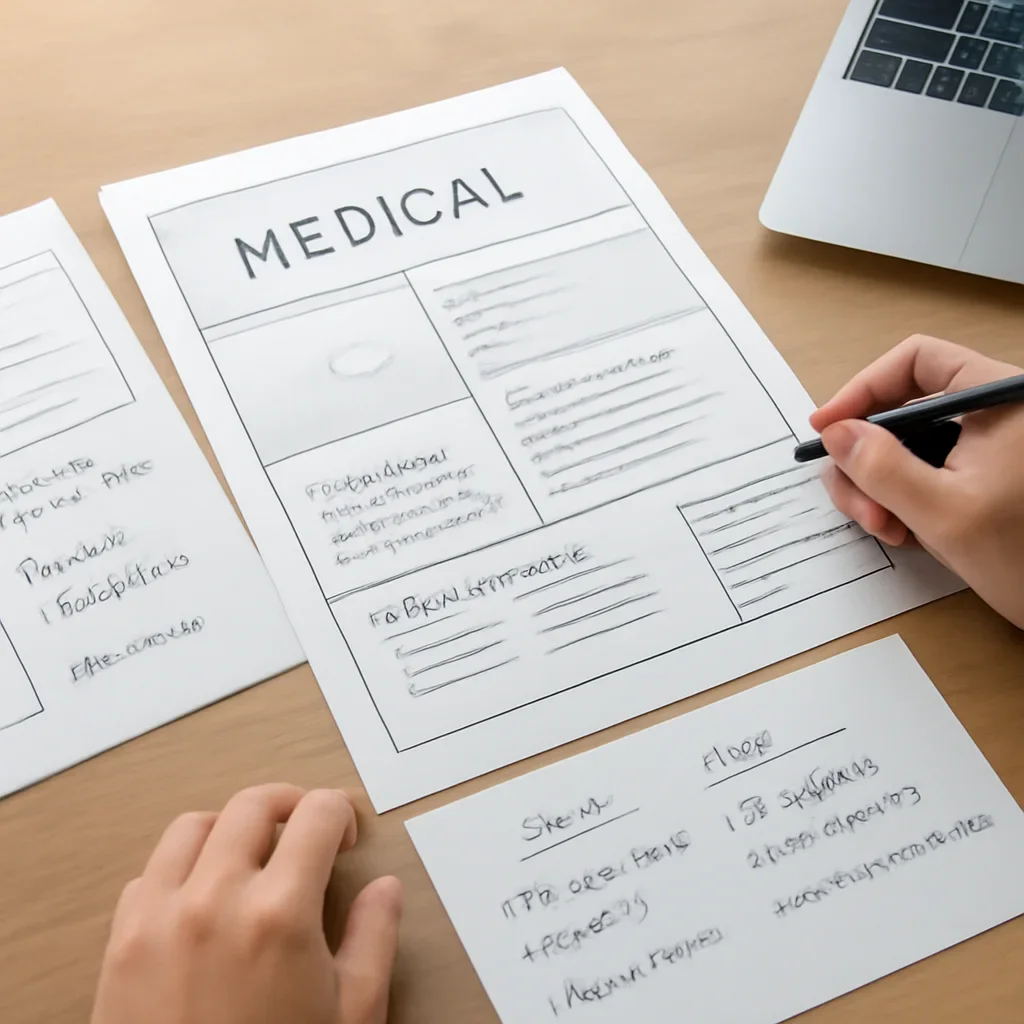
A patient-friendly medical website organizes information around real questions: what the clinic offers, who provides care, where to go and how to book or contact the practice.
Why medical website structure matters
People may arrive while comparing clinics, preparing for a referral, checking whether a service is offered or looking for appointment instructions. They should not need to search through promotional content to find basic details.
A well-planned medical website reduces uncertainty with clear service descriptions, practitioner information, location details, accessibility guidance and contact options matched to the clinic’s real process.
Medical website capabilities
The right structure depends on whether the organization is a specialist clinic, family practice, allied health provider, diagnostic service, multidisciplinary centre or multi-location medical group.
Organize information for new patients, existing patients, caregivers and referring professionals without mixing every need together.
Explain each service, who it may be relevant for, how access works and what the clinic wants patients to do next.
Present roles, qualifications, areas of focus and professional information accurately and consistently.
Make addresses, directions, hours, parking, transit, building access and contact details easy to find where relevant.
Clarify whether patients can self-book, need a referral, should call or should use an approved booking system.
Support readable text, clear navigation, keyboard use, contrast and simple mobile interactions across the website.
Hyperlocal Vancouver healthcare reality
A Downtown specialist clinic may need referral instructions, building access and transit details. A Broadway-area practice may need clear parking, transit and appointment guidance. A Kitsilano allied health clinic may rely more heavily on self-booking and practitioner selection. A multi-location organization serving Vancouver, Burnaby or Richmond needs each clinic page to show the correct services, hours and access information.
Patients may need building access, elevator, transit, parking and referral details before arriving for an appointment.
Clinic pages should make transportation, nearby landmarks, appointment instructions and the correct entrance easier to understand.
Allied health and appointment-based practices may need clearer provider selection, services, schedules and online booking routes.
Each location should show accurate services, practitioners, hours and contact pathways rather than copying one clinic page.

Hyperlocal medical content should help patients arrive prepared and reach the correct clinic—not simply repeat neighbourhood names.
What is included
The project should define services, patient groups, locations, booking or referral processes, content ownership and privacy boundaries before design production advances.
Clarify services, practitioner expertise, referral pathways, appointment preparation and clinic access within one focused website.
Organize multiple providers and services so patients can understand the right care pathway without navigating a confusing directory.
Create consistent location templates while keeping services, practitioners, hours and access details accurate for each clinic.
Medical web design process
Each stage resolves a different communication and operational question before the website moves into production.
Define services, locations, patient groups, referrals, booking methods, contact boundaries and current website problems.
Organize services, practitioners, locations and patient resources around distinct questions and next steps.
Define what each page must explain, what information needs clinical review and which claims require support.
Create clear page layouts, forms, buttons and navigation patterns for desktop, tablet and mobile users.
Check content accuracy, links, forms, clinic details, accessibility basics and ownership before publishing.
A documented review process helps clinical, administrative and marketing stakeholders keep patient information accurate after launch.
Experience, expertise and trust
The website should make the real clinic, practitioners, services and patient process visible without making unsupported treatment or outcome claims.
Patient pathways by intent
A medical website should help each audience find relevant instructions without exposing unnecessary information or making them guess which form to use.
Explain services, eligibility or referral steps, appointment options, clinic locations and what to prepare before contacting the practice.
Provide practical contact, appointment, location and administrative information without using general forms for urgent or sensitive matters.
Clarify referral criteria, required information, submission route and appropriate clinic contact where relevant.
Explore the right next step
Use the page that best matches your current need, from improving responsive usability to planning stronger local clinic pages.
Medical web design questions
These direct answers cover services, booking, local pages, accessibility, forms, health content and project preparation.
An effective medical website clearly explains services, practitioners, locations, access requirements and next steps. It should feel calm and professional, remain easy to use on mobile and help patients find practical information quickly.
Separate pages are useful when patients search for services independently and each service needs enough accurate information. Closely related services may be stronger on one well-organized page if separate pages would be thin or repetitive.
Approved booking, referral or intake tools can be connected when the workflow, data handling, permissions and user experience have been reviewed. The website should clearly distinguish general contact from clinical or urgent communication.
Yes, when the clinic genuinely serves those areas or operates multiple locations. Each local page should provide accurate services, access information, practitioners and contact details rather than repeating one generic city template.
General website forms should request only the information needed for the stated purpose. Clinical, referral or sensitive information should be handled through approved workflows selected by the practice and reviewed for privacy and operational suitability.
Yes. Patients may have different visual, motor, cognitive or situational needs. Clear headings, readable text, contrast, keyboard support, descriptive links and simple forms improve access for a wider range of users.
Yes. Existing service pages, practitioner content, URLs, forms and search visibility should be reviewed first. Useful information may be retained or improved, while outdated or duplicated content may need consolidation.
Prepare the current website, service list, clinic locations, practitioner information, booking or referral workflow, patient audiences, required integrations, available content and the main problems the new website should solve.
Start your Vancouver medical website project
Share your services, clinic locations, patient audiences, booking or referral process and current website challenges. The first step is to define the right structure, content responsibilities and patient pathways.