Vancouver web design case studies

Vancouver Web Design Case Studies and Project Examples

Explore how strategy, content structure, responsive design and conversion planning can solve the website problems Vancouver businesses face when launching, redesigning or expanding online.

This page focuses on the decisions behind stronger websites: what needed to become clearer, how the user journey was reorganized and which evidence should be reviewed before calling a project successful. Client names, private data and performance claims are only shared when permission and reliable reporting are available.

Business problem first Each project direction begins with the customer, market and website problem rather than visual decoration.
Local search and user journeys Service, location and support pages are organized around how Vancouver customers actually research and compare.
Evidence without inflated claims Results should be tied to a clear baseline, approved data and the work that can reasonably be connected to the outcome.

What should a Vancouver web design case study show?

A useful web design case study should explain the original business problem, the audience, the website structure before and after the work, the design and content decisions made, and the evidence used to assess improvement. For a Vancouver business, it should also reflect the company’s service area, local competition, customer intent and the way people move between service, location, proof and contact pages.

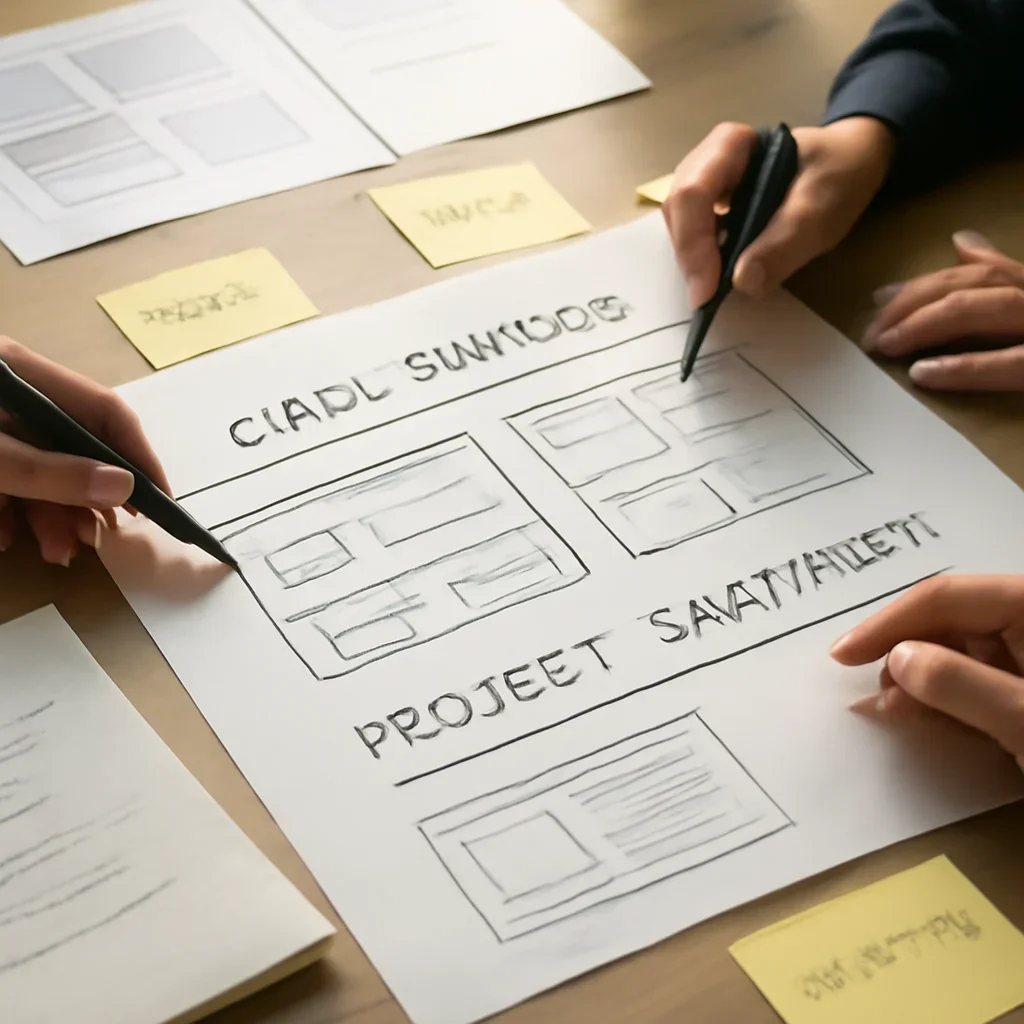
Vancouver web design case study planning session with sitemap, wireframes and content notes

The most useful project review connects the business goal to page structure, content, design decisions and a measurable next action.

How to evaluate the work

Look beyond the homepage and ask what changed for the customer

A polished screenshot can show visual quality, but it does not explain whether the website became easier to understand, easier to navigate or more useful to the people the business needs to reach.

For service businesses in Vancouver, the strongest project examples show how visitors move from a search or referral to the right service, location, proof and contact information without unnecessary friction.

  • A clear business challenge and intended audience
  • A logical sitemap and one purpose for every important page
  • Keyword-focused headings that remain natural for users
  • Trust content placed near high-consideration decisions
  • Mobile calls to action that are easy to find and use
  • Evidence that separates verified results from expectations

Representative project directions

Common Vancouver website projects and the problems they need to solve

These are representative project patterns rather than unnamed client success claims. They show the strategy, structure and conversion questions that should be addressed for different types of website work.

01

New Website for a Local Service Business

Common challenge

The business depends on referrals or social profiles, but prospective customers cannot quickly compare services, service areas, qualifications or next steps.

Project direction

Build a clear service hierarchy, local coverage structure, trust sections, direct answers and mobile-friendly inquiry paths.

What to evaluate

Service-page engagement, qualified form submissions, calls from relevant service areas and the questions prospects ask after visiting the site.

02

Website Redesign for an Established Firm

Common challenge

The company has experience and a recognizable name, but the current website feels dated, hides valuable information or creates a weaker impression than the real business.

Project direction

Preserve useful URLs and authority while improving positioning, page hierarchy, proof, accessibility and responsive usability.

What to evaluate

Navigation clarity, engagement with high-value pages, inquiry quality, mobile usability and whether existing search visibility was protected.

03

SEO and Location Expansion for Growth

Common challenge

The site has a basic presence but lacks focused service pages, useful location content, internal links and support resources for broader search demand.

Project direction

Create distinct service, city and neighbourhood paths without duplicating the same generic content across every page.

What to evaluate

Relevant non-brand visibility, landing-page quality, local inquiry patterns and whether users reach the correct service and location content.

Hyperlocal Vancouver reality

The same website strategy does not fit every Vancouver business district

Downtown professional firms, Yaletown technology and consulting businesses, Mount Pleasant creative companies, Kitsilano clinics and neighbourhood retailers, and East Vancouver service providers attract different audiences and compete on different forms of trust.

A credible project example should show how the website reflects the business model and customer journey rather than treating Vancouver as a keyword added to otherwise generic copy.

Downtown and Yaletown

Professional services, technology, hospitality and higher-consideration businesses often need stronger credentials, team information, consultation pathways and polished mobile presentation.

Mount Pleasant and Main Street

Creative, retail, wellness and independent businesses benefit from a distinctive brand presentation supported by practical service, booking, product or visit information.

Kitsilano, West End and UBC

Clinics, consultants, education-adjacent organizations and neighbourhood services may require clearer audience pathways, accessibility and locally relevant support content.

Metro Vancouver growth

Businesses serving Burnaby, Richmond, Surrey, North Vancouver or Langley need a planned regional architecture that avoids thin or duplicated city pages.

Local relevance should change the page

Useful local content explains who the business serves, what customers in that market need to know, how services are delivered and which nearby pages help them continue their research.

Local relevance is not city-name repetition

Replacing one neighbourhood name with another does not create a credible local page. Each page should have a distinct role, useful information and internal links that reflect a real service path.

Conversion intent also changes by market

A professional firm may prioritize consultation requests, a clinic may prioritize calls or booking, a contractor may need urgent service actions, and an ecommerce brand may need product discovery and checkout confidence.

Evidence and E-E-A-T

Strong case studies separate verified evidence from persuasive language

A trustworthy project story explains what was known before the work, what changed, how the change was reviewed and which limitations remain. It should not present estimates, screenshots or isolated ranking movements as guaranteed business results.

Starting point Document the original sitemap, usability problem, content gap, technical limitation or conversion barrier.
Work completed Show the pages, design system, content structure, internal links, responsive changes and technical work that were actually delivered.
Measurement method Identify the reporting source, comparison period and metric definition before interpreting performance.
Reasonable attribution Explain when outcomes may also reflect seasonality, advertising, brand activity, reviews, market demand or operational changes.

What can be shared publicly

Approved screenshots, project scope, design rationale, page examples, publicly visible improvements and verified client comments can strengthen a case study when permission is documented.

What may need to remain private

Client names, analytics, revenue, lead data, internal documents and competitive strategy should not be published without clear authorization.

What to request during consultation

Ask for the most relevant examples based on your industry, website type, project stage and goals. This is more useful than choosing a provider only because one portfolio image looks similar to your preferred style.

Vancouver website design process showing discovery, sitemap planning, content hierarchy and responsive review

A documented process makes the final work easier to evaluate because each design decision can be connected to a business or user requirement.

Website project process

From the original website problem to a launch-ready solution

The process is designed to prevent visual design from starting before the business goal, audience, page structure and conversion path are understood.

01

Discovery and baseline

Clarify the business model, audience, current website problems, local competitors, existing content and the actions that matter most.

02

Sitemap and search structure

Define the role of core, service, location, comparison, resource and conversion pages before the interface is designed.

03

Content and conversion planning

Organize direct answers, proof, objections, internal links and calls to action around the questions visitors need resolved.

04

Design and responsive refinement

Create the visual system, then review navigation, reading flow, forms and action clarity across desktop, tablet and mobile.

05

Quality review and measurement plan

Check headings, links, accessibility basics, local consistency, analytics readiness and the post-launch indicators that should be monitored.

Vancouver web design case study FAQs

Questions to ask before choosing a web design partner

The right comparison is not only about visual style. It is also about whether the provider can explain the project problem, process, evidence, local relevance and next steps clearly.

Are these published examples tied to named clients?

The project directions on this page explain common website challenges and strategy patterns. They should not be interpreted as named client case studies or verified performance claims unless a client, scope, timeframe and evidence source are explicitly identified.

What information should a real web design case study include?

It should include the client context, original problem, audience, scope, sitemap or user-flow changes, design and content decisions, implementation details, timeframe, evidence source and any limits on attribution.

Can you share relevant project examples during a consultation?

Relevant examples can be discussed based on your industry, website type and goals when the material is available and can be shared without violating client confidentiality.

How do local SEO requirements affect a Vancouver website project?

Local SEO can affect service-page structure, city and neighbourhood content, internal linking, business information, reviews, schema and the way visitors move from local search to a clear contact or booking action.

What should be measured after a website redesign?

Useful measures may include qualified inquiries, calls, form completion, engagement with key service pages, mobile usability, organic landing-page visibility and whether visitors reach the right conversion step. The measurement plan should match the business goal.

How can I compare two Vancouver web design companies?

Compare their discovery process, sitemap and content planning, responsive work, accessibility approach, SEO structure, evidence standards, ownership terms, project responsibilities, communication and post-launch support—not only the appearance of portfolio images.

What should I provide for a useful project recommendation?

Share your current website, core services, priority locations, required functionality, examples you like, known problems, timeline and the business action the new website should support.

Can a website be expanded after the first launch?

Yes. A planned architecture can support future service pages, locations, case studies, resources, integrations and conversion improvements without requiring a complete rebuild each time the business grows.

Start with your real website challenge

Need a Vancouver web design partner who can explain the strategy behind the work?

Share your current website, the pages or results that are not working, the customers you need to reach and the next action the website should support. You will receive clearer direction on project fit, scope and the most useful next step.

Not ready to request a quote? Review website design pricing or compare business website solutions.

Presentation of a conversion-focused Vancouver website design project and next-step recommendations

A useful consultation should clarify the website problem, the project scope and the evidence needed to evaluate the finished work.